How Frontiers CTSI Helped My Research: Quincy Johnson, Ph.D.
By Kelly Hale , Marketing & Communications Specialist
Oct 28, 2026
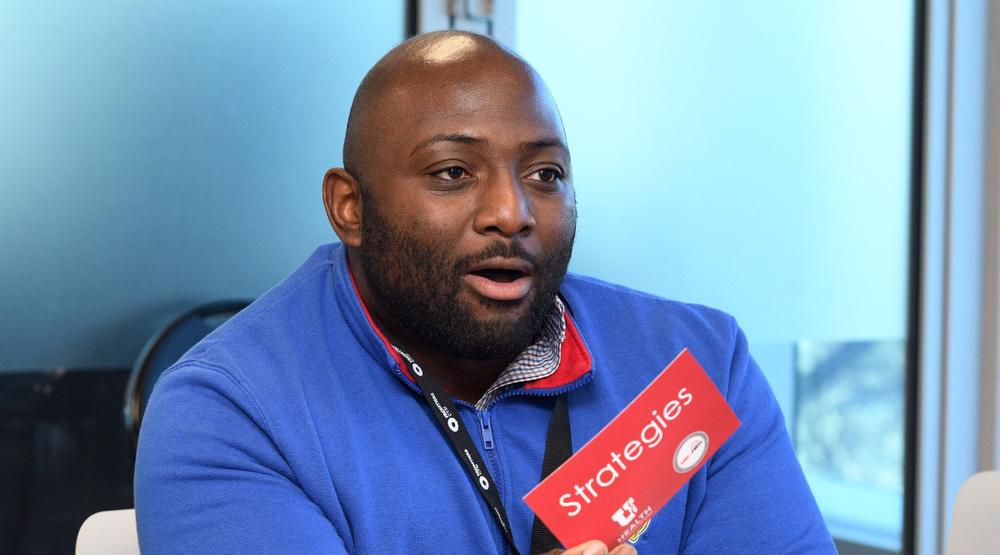
Quincy Johnson, Ph.D., currently an assistant professor at Oklahoma State University, first connected with Frontiers Clinical and Translational Science Institute while he was at the University of Kansas, where he was the Founding Director of Jayhawk Performance and Sports Translational Research for Improved Development and Excellence (STRIDE) Kansas.
Johnson’s research focuses on optimizing athletic performance, developing physiological profiles for training and return to play strategies, and long-term athletic development. He has collaborated with athletes from high school to pro leagues.
As Johnson was working on STRIDE, he wanted to find a way to share the information he was gathering regarding the biological principles of peak performance. But there is a disconnect between the research and his target audience.
“First, I want to thank Frontiers CTSI for all of their support through this,” said Johnson. “Athletes are always looking for an edge, but athletic careers also end at some point, so we are exploring and developing new ways to increase knowledge related to.”
Johnson’s project aims to translate human performance in athletes to the general population to bridge gaps related to maximizing athletic performance while mitigating the risk of injury throughout a person’s lifespan.
“We get questions all the time like ‘how strong should I be?’ or ‘how much should I bench press?’ so we want to be able to connect the dots for people through education and research,” said Johnson. “We started this project by reaching out to ten superintendents and athletic directors from school districts and hosted a professional development workshop for them. We had one school take us up on participating and so we sat down and asked them what they need to help their athletes.
“It is a very collaborative process. We have an exercise library built that we have shared with them, we share the research we have developed, how to interpret the results from assessments and how to classify an athlete.”
From there, Johnson and his team were able to collaborate with the coaches and athletic trainers to develop individual plans for the athletes to enhance their athletic performance.
The key to the program being successful is building relationships where coaches and athletic trainers provide insight, and the research team provides resources to help, especially when athletes are preparing for competition or returning from injuries.
“For STRIDE, I used the Biostatistics, Epidemiology and Research Design (BERD) voucher, to help connect the dots of the project so that I could streamline communications to the audience,” said Johnson. “The voucher really helped me describe, correlate, and compare datasets.”
Johnson also usually presents a poster at the National Strength and Conditioning Association national conference, but with the new statistical data he was able to develop, he presented his findings through an oral presentation at the conference.

Kelly Hale
Marketing & Communications Specialist
Latest Articles
View All News
 TL1 Trainee · News
 Funded Projects · News
 KL2 Scholar · News
 Funded Projects · News
 TL1 Trainee · News
 Funded Projects · News
 KL2 Scholar · News
 KL2 Scholar · News




































 News · In the Community












 News




















 Funded Projects · News