Workforce Heterogeneity
One of the goals of Frontiers is to advocate and facilitate the recruitment, retention and overall success of a multidisciplinary translational workforce that encompasses investigators, trainees, and community partners from across all our partner institutions. Additionally, we seek to foster an environment where the integration of multiple perspectives is valued as an essential asset for generating knowledge to benefit all patients and communities.
Resources for becoming a Clinical and Translational Science Researcher
This informational toolkit provides a variety of resources and guides to help early career faculty in medicine and science learn about and prepare to become independent clinical and translational science researchers. It also provides insight into the role of mentorship as a key component for a successful research career and how to prepare for the KL2 Mentored Career Development Award and other types of K award programs through the NIH individual development awards program.
Much of the information for these resources is adapted from C. Michael Stein’s 2018 book Not Discussed: - the unspoken rules for a career in academic medical research. This is an excellent resource for anyone considering academic medical research.
Do you want to be a researcher? Perhaps the first thing you might want to do is decide if you want to be a researcher. If you are still deciding if research is for you, the following resources may help.
First, there are many types of career trajectories in academic medicine. The following table is a snapshot of your potential career choices. (Note these are guidelines not absolutes.)
The Five Major Career Tracks in Academic Medicine
|
Physcian-Scientist |
Clinican-Scholar/Educator |
Medical Center Clinican |
Tenure Track Scientist |
Non-Tenure Track Scientist |
|
|---|---|---|---|---|---|
|
Clinical |
20% |
80% |
100% |
0% |
0% |
|
Research |
80% |
20% Research, Education, Scholarly, Activity |
0% |
100% |
100% |
|
PI of NIH grants |
Yes |
No |
No |
Yes |
No |
|
Tenure Track |
Yes |
Not at most institutions |
No |
Yes |
No |
|
Primary yardsticks |
Grants, Papers, Reputation |
Clinical, Scholarship, Reputation |
Clinical |
Grants, Papers, Reputation |
Papers, Research team, Reputation |
|
Secondary yardsticks |
Citizenship, Clinical work, Teaching |
Citizenship |
Citizenship |
Citizenship, Teaching |
Citzenship |
Title: Not Discussed: The Unspoken Rules for a Career in Academic Medical Research
Author: Charles Michael Stein
Publisher: C. Michael Stein, 2018
The following videos explain the field of translational research and what it is like to be a clinical and translational science scholar.
- NCATS Video – What is Translational Research - https://www.youtube.com/watch?v=TnHLo-hCssg
- Video – Translational Science Scholar Perspective
https://www.youtube.com/watch?v=D-_lsO9dsgY
If you are still deciding, here are some ways to help.
1. Self-Assessment
Ask yourself…
• Do I enjoy solving open-ended, ambiguous problems?
• Am I okay with delayed gratification (papers, grants take years)?
• Would I be excited to lead a research team one day?
• Do I like writing, presenting, and thinking about unanswered questions?
• Do I want a career judged by publications, grants, and reputation?
If you said “yes” to most — research might be a good fit.
If “no,” clinical excellence, teaching, or QI may suit you better.
2. Questions to Ask Academic Researchers
Use these in informal interviews:
• What’s your week actually like (research vs. clinic vs. admin)?
• Why did you choose research?
• What surprised or challenged you most?
• How do you protect research time?
• How did you find your first funding?
• What’s your favorite and least favorite part of the job?
Consider talking to at least 3 people at different stages (early-career, mid-career, senior).
3. Ways to Explore Without Committing Fully
Try one or more of the following:
|
Action |
Outcome |
|
Join a research team for 3–6 months |
See process up close |
|
Shadow a clinician-researcher |
Learn daily realities |
|
Attend research-in-progress seminars |
Understand how ideas are shaped |
|
Draft or co-author a paper |
See what writing entails |
|
Read a grant (or Specific Aims page) |
Understand the storytelling and structure |
|
Meet with a K awardee |
Learn about protected time & career paths |
Successful researchers are not born, they are made with the help of others. Mentorship is a key component of a research career. Mentorship in research is more than guidance: it’s a transformative partnership that nurtures scientific skills, emotional resilience, independence, and a research identity. It supports both technical and soft-skill development, fosters innovation, and opens doors within academia. For mentors, it refines leadership and shapes a legacy; for institutions, it strengthens culture and retention. The following links provide more information about key aspects of mentorship.
Types of Mentors and Identifying your Mentorship Needs
Different types of mentors may support you through different stages of your career. Here are just a few examples:
| Example Membership Types | Description |
| Research Mentor | Provides guidance on research design, grant writing, publishing, and developing a scholarly trajectory. Key for building an academic portfolio. |
| Clinical Mentor | Supports growth in clinical expertise, patient care, and navigating specialty-specific practice challenges. |
| Career Development Mentor | Helps with setting long-term career goals, promotion and tenure processes, and balancing competing professional demands. |
| Sponsoring Mentor (Sponsor/Advocate) | Actively uses their reputation and networks to create opportunities, recommend the mentee for awards, committees or leadership roles. |
| Administrative/Leadership Mentor | Guides development of leadership, management, and administrative skills, including committee work and program direction. |
Finding a mentor begins with understanding yourself and your needs. From here you can identify your goals and what mentor characteristics can best support them. Harvard Catalyst provides a user guide that walks you through each of these processes.
Finding a mentor begins with understanding yourself and your needs. From here you can identify your goals and what mentor characteristics can best support them. Harvard Catalyst provides a user guide that walks you through each of these processes.
Finding and Choosing a Mentor
For a quick overview of finding a mentor, check out the National Academies podcast on Finding a Mentor.
There are good reasons and not-so-good reasons for selecting a mentor. Stein (2018) has this convenient table to quickly spot the difference:
Poor reasons for choosing a mentor:
| Timing | Dr. X rounded with me first and suggested a project |
| Admiration | Dr. X is a wonderful clinical and role model |
| Subservience | The Chief of X offered me a project |
| Familiarity | Dr. X was my chief resident |
| Gulliable | Dr. X was so enthusiastic |
| Obligation | At the time, I couldn't say no to Dr. X |
| Spur of the Moment | Dr. X and I saw a case and thought up an easy project |
Good reasons for choosing a mentor:
| Success | Dr. X published 50 papers, has 2 ROIs and mentored |
| Time | Dr. X makes times for trainees |
| Expertise | Dr. X is internationally recognized in my research area |
| Resources | Dr. X has the funding, equipment and technicians I need |
| Character | Dr. X is enthusiastic, supportive, fair and I like... |
| Clout | Dr. X has influence in my institution and nationally |
Stein (2018) also provides a clear snapshot of mentor characteristics to look for and avoid:
| Perfect Mentor* | Imperfect Mentor |
| 1. Teacher | 1. Absentee landlord |
| 2. Sponsor (Godfather, fixer) | 2. Benevolant landlord |
| 3. Advisor | 3. Dictator |
| 4. Agent (Lobbyist, advocate) | 4. Self-promoter |
| 5. Role Model | 5. Jerk |
| 6. Coach | 6. Parent, judge, critic, taskmaster |
| 7. Confidante | 7. Gossip |
| 8. Giver | 8. Taker |
| 9. Mind reader | 9. Steam roller |
| 10. Plays well with others | 10. Throws toys |
| 11. Able to let go | 11. Hangs on |
| 12. Observes boundaries | 12. Poor boundary recognition |
| 13. Can read a map | 13. Wanders all over the place |
| 14. Is not responsible for you | 14. Is responsible for you. |
*The first seven characteristics of a perfect mentor are from: Tobin MJ.: Mentoring; seven roles and some specifics. American Journal of Respitory and Critical Care Medicine. 2004 Jul 15; 170(2); 114-7.
Working with a mentor
Once you have identified mentors, there are several resources to support mentoring relationships. Including:
The Center for the Improvement of Mentored Experiences in Research is a go-to resource for mentoring questions, training, and scholarship. CIMER (https://cimerproject.org/)
National Research Mentoring Network (NRMN) is another resource supporting all aspects of mentorship with resources targeted specifically for early career researchers.
These resources can be shared with your mentor. You may find other videos important to share as well such as Mentoring & Sponsoring those Under-Represented in Research in Science.
Here are common issues to consider when working with a mentor and how you might address them:
| Common Issues | How to address them |
| Clarifying Expectations |
|
| Setting Goals and Accountability |
|
| Time and Availability |
|
| Alignment and Fit |
|
| Power-Dynamics and Professional Boundaries |
|
| Feedback and Communication |
|
| Credit, Authorship and Intellectual Property |
|
| Career Advancement and Sponosrship |
|
| Evolving Relationships |
|
For more information about the importance of mentorship, visit:
National Academies of Sciences, Engineering and Medicine The Science of Effective Mentorship in STEMM
UW-Madison Center for the Improvement of Mentored Experiences in Research (CIMER) - Research Publication Library
In addition to resources provided by Frontiers, here are some tips and links to support grant writing:
First, familiarize yourself with the writing format and Federal Resources:
- Learn the NIH format. NIH is the world's largest awarder of biomedical research grants, and their format is commonly used by other grant agencies as well. Use the NIH RePORTER to find grants at your institution or related to your interests.
- Familiarize yourself with the Office of Extramural Research (OER), the arm of NIH that awards grants. Here you can find tips on applying for grants, writing grant applications, and additional grant opportunities.
- Read sample grant applications. Ask colleagues to share successful applications or the examples provided by the NIH. (Be sure to scroll down to see example K-aware applications.)
Other helpful sites:
- NIH Early Career Reviewer Program – helps junior faculty learn how grants are reviewed.
- K Kiosk – NIH career development awards guidance.
Books you may want to check out:
- The Grant Application Writer’s Workbook (Russell & Morrison) – a widely recommended step-by-step manual. NIH Version
- Winning Grants Step by Step (Carlson & O’Neal-McElrath)
Frontiers CTSI offers a KL2 Program designed to cultivate a skilled cadre of early-career clinical and translational researchers. The program features a tailored core curriculum that offers rigorous training in clinical and translational research, along with targeted career development activities. By equipping scholars with the skills, knowledge, and support they need to thrive, the KL2 Program fosters the next generation of leaders in translational science. The KL2 Program is offered as part of Frontier’s Education & Training.
Questions regarding the program can be sent to the KL2 & TL1 Program Director, Holly Zink, Ph.D., MSA.
Other K type award opportunities include:
K 23
KUMC/Cancer Center K12 program
Robert Wood Johnson awards
Know your Audience
Each K mechanism has a different audience.
|
Mechanism |
Audience |
Applicant Type |
|
K01 |
Basic/behavioral researchers |
Non-clinicians (PhD) |
|
K08 |
Lab-based clinician-scientists |
MD, lab work |
|
K23 |
Patient-oriented research |
MD/DO, clinical research |
|
K99/R00 |
Transition to independence |
Postdocs (non-clinical) |
General Timeline for Preparing your Grant
|
Time Before Deadline |
Key Tasks |
|
9–12 months |
Choose gran, draft aims |
|
6–9 months |
Preliminary data, mentor letters, career plan |
|
3–6 months |
Biosketches, institutional letters, refine proposal |
|
1–3 months |
Full draft to reviewers, mock study section |
|
0–1 months |
Final polish and submission |
Not everything can be summed up through online resources for there is always more to learn about becoming a translational science researcher. If you want to continue to learn more, we recommend the following:
Book: Not Discussed – the unspoken rules for a career in academic medical research by C. Michael Stein
Podcast Series:
National Academies: The Science of Effective Mentoring in STEMM
NIH: All About Grants Podcasts
Pathway Programs
The Workforce Heterogeneity core recognizes the many pathway programs that support students who are interested in medicine and science. The following pathway programs provide early opportunities for success in Translational Research and Science:
STAR 2.0 (Children's Mercy Kansas City)
STAHR (UMKC)
KU Medical Center K-12 Initiatives
JUMP-Start (Kansas City University; undergraduate college students)
Other programs supporting students and trainees:
If you would like your program listed above, please contact the Frontiers Workforce Heterogeneity Navigator.
Workforce Heterogeneity Contacts
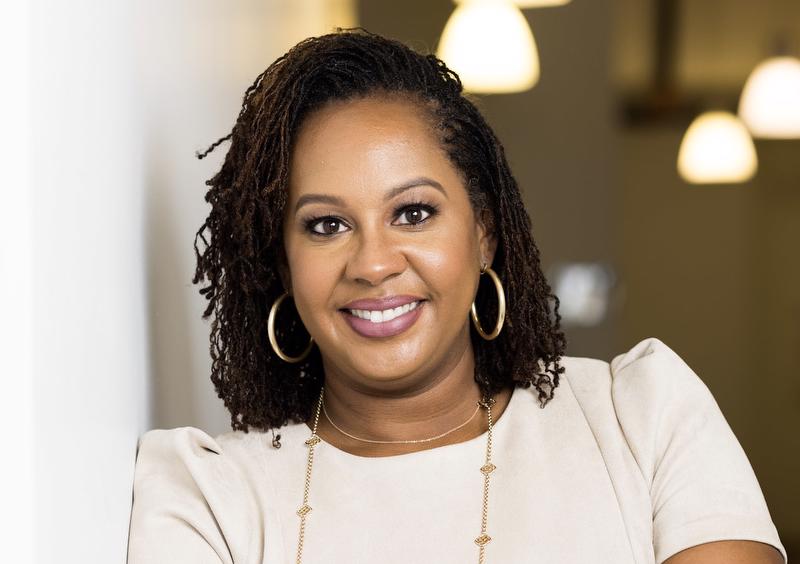
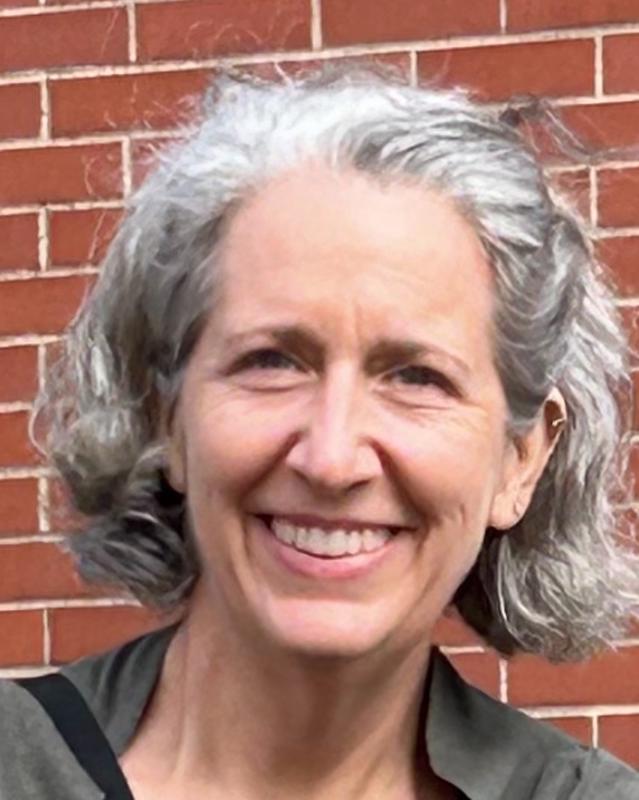
Interested in Learning More?
One of our Navigators would be happy to assist you in learning more about their respective areas by contacting us below.